DH Moran, Lifestyle Writer
The office lobby is more than an entryway—it’s the spatial prologue to a company’s story, a physical embodiment of its culture, values, and aspirations. For architects, developers, and designers, crafting this first impression is both an art and a strategy. And increasingly, original art is proving to be the indispensable element that redefines how these spaces are experienced.
Beyond Decoration:
Art as Atmosphere Traditional lobby design often focused on finishes, furnishings, and lighting—elements that, while essential, risk feeling superficial without a meaningful centerpiece. Enter original art: a catalyst that shifts a lobby from merely functional to emotionally resonant.
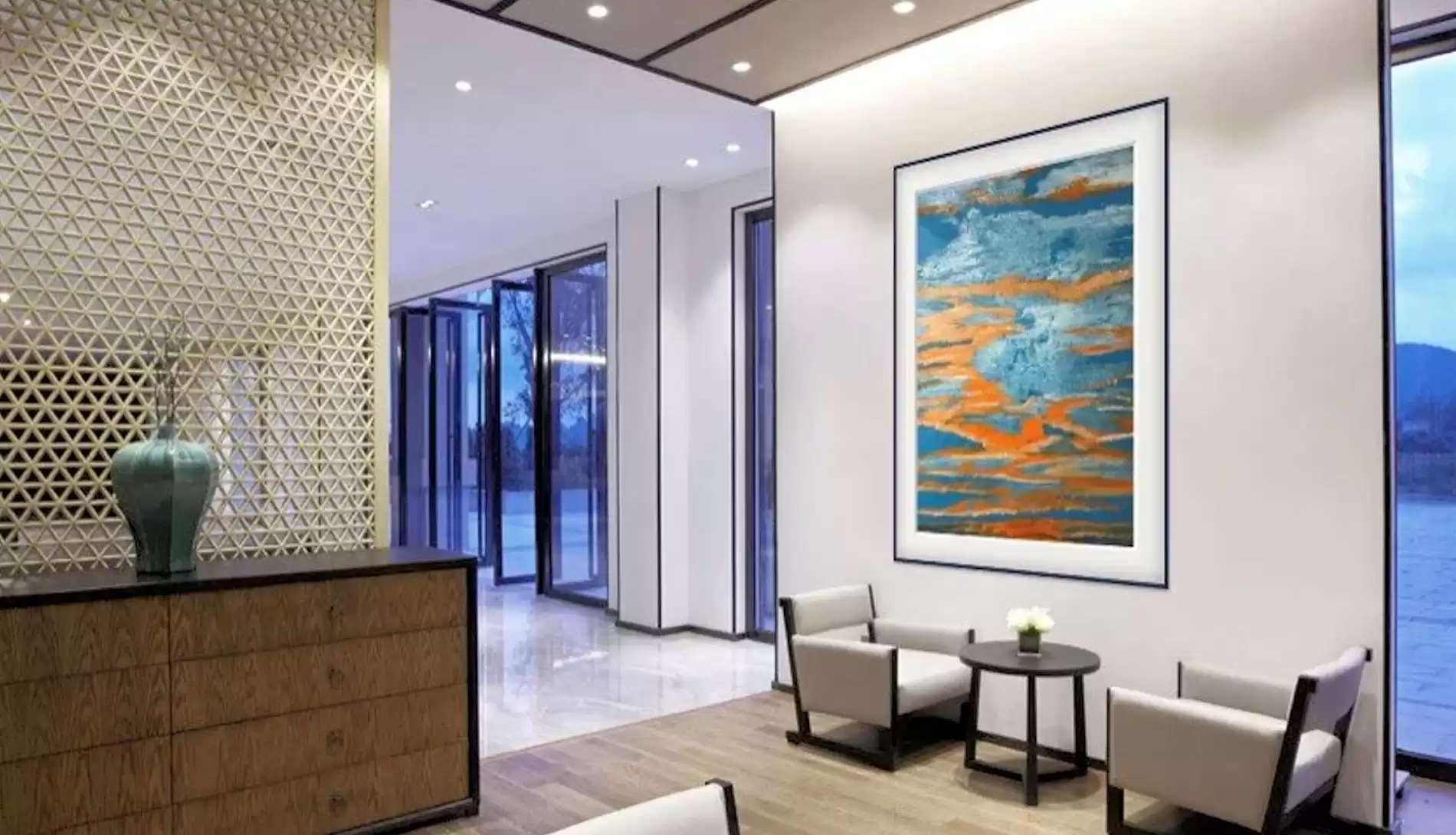
In high-touch environments—lobbies, lounges, restaurants, and branded destinations—large-scale paintings and photographs offer far more than visual impact. These works are conceived to harmonize intimately with architecture and interior design, becoming integrated extensions of the space rather than mere adornments. From site-specific installations that respond to the unique rhythm of the environment to bold statement pieces that anchor the room, each artwork is built to engage—with the architecture, with the narrative, and with every person who enters.
Why Original Art Matters Here
In the realm of lobby design, first impressions are everything—and original art is a powerful way to shape them. Unlike generic décor, an original piece carries authenticity and intention, instantly signaling that this is a space— and a company—that values creativity, craftsmanship, and meaning.
Original art brings a unique story and presence that can’t be replicated or mass-produced. It engages visitors on a deeper level, offering a moment of pause and connection as they enter. This human touch subtly conveys a message of care and distinction, setting the tone for every interaction that follows.
Because original works are often site-specific, they can be thoughtfully tailored to harmonize with the architectural language and flow of the lobby. They complement lighting and spatial proportions, creating a cohesive environment where art and design speak in one voice. This seamless integration elevates the entire experience— transforming a lobby from a mere threshold into an immersive, memorable introduction. It’s an essential ingredient in crafting a space that welcomes, inspires, and leaves a lasting impression.
Corporate Spaces: Art as a Living Brand
Within corporate environments, art takes on a quiet yet strategic role. It becomes an essential part of the brand’s atmosphere—setting tone in entryways, fostering calm in gathering areas, and inspiring creativity and focus where people meet, think, and move. Abstract or textural, each commissioned work is carefully aligned with the architectural vision and workplace culture, shaping how a company feels from the inside out.
Art here is not static decoration; it’s a living, breathing presence that reflects a company’s values while subtly influencing mood and interaction. It creates a space where visitors feel welcomed, employees feel grounded, and the brand narrative is experienced viscerally
Shaping Experience Through Scale and Emotion
Scale plays a pivotal role in lobby art. Large-format works command attention, anchoring the space and guiding movement. They create moments of pause and reflection amid busy circulation paths. But beyond size, it’s emotional resonance that defines success.
Art that taps into the ethos of a company—its vision, values, and aspirations—does more than decorate. It offers a subtle emotional layer that shapes mood, inspires creativity, and cultivates a sense of belonging. In this way, art becomes a silent ambassador, crafting an experience that stays with visitors long after they leave.
The Designer’s Secret Weapon
For architects and interior designers, original art offers a powerful tool to finalize and elevate their vision. It acts as the connective tissue that unifies palette, proportion, and purpose. When thoughtfully integrated, it transforms a lobby from a transient passage to a memorable destination.
Enter the Philosophy of Emotional Architecture
This approach to lobby design aligns with a broader philosophy: viewing art not as adornment but as emotional architecture—an essential element that builds space with feeling and intention.
Artist Peter Macon Meyer not only coined this term but roots his work deeply in this philosophy. With a background in architecture and a deep understanding of space, Peter’s large-scale abstract works are crafted to resonate emotionally and spatially. His art doesn’t just occupy the lobby; it grounds it—providing a lasting, soulful presence that redefines how space is experienced.
“My work isn’t about decoration—it’s about creating presence.” Peter suggests.
The Lasting Impact
The lobby is a space of first impressions—but with original art, it becomes so much more. It transforms into a stage where brand identity unfolds, where visitors feel welcomed, and where the ordinary becomes extraordinary. In these moments, art doesn’t just change a space; it changes the way people experience it.
For architects, developers, designers, and collectors invested in creating environments that truly resonate, embracing original art is no longer optional—it’s essential.
Explore Peter Macon Meyer’s portfolio of site-responsive works, or commission a piece tailored to your next residential, commercial, or hospitality project.