A look at how abstract works are reshaping interiors.
DH Moran, Lifestyle Writer
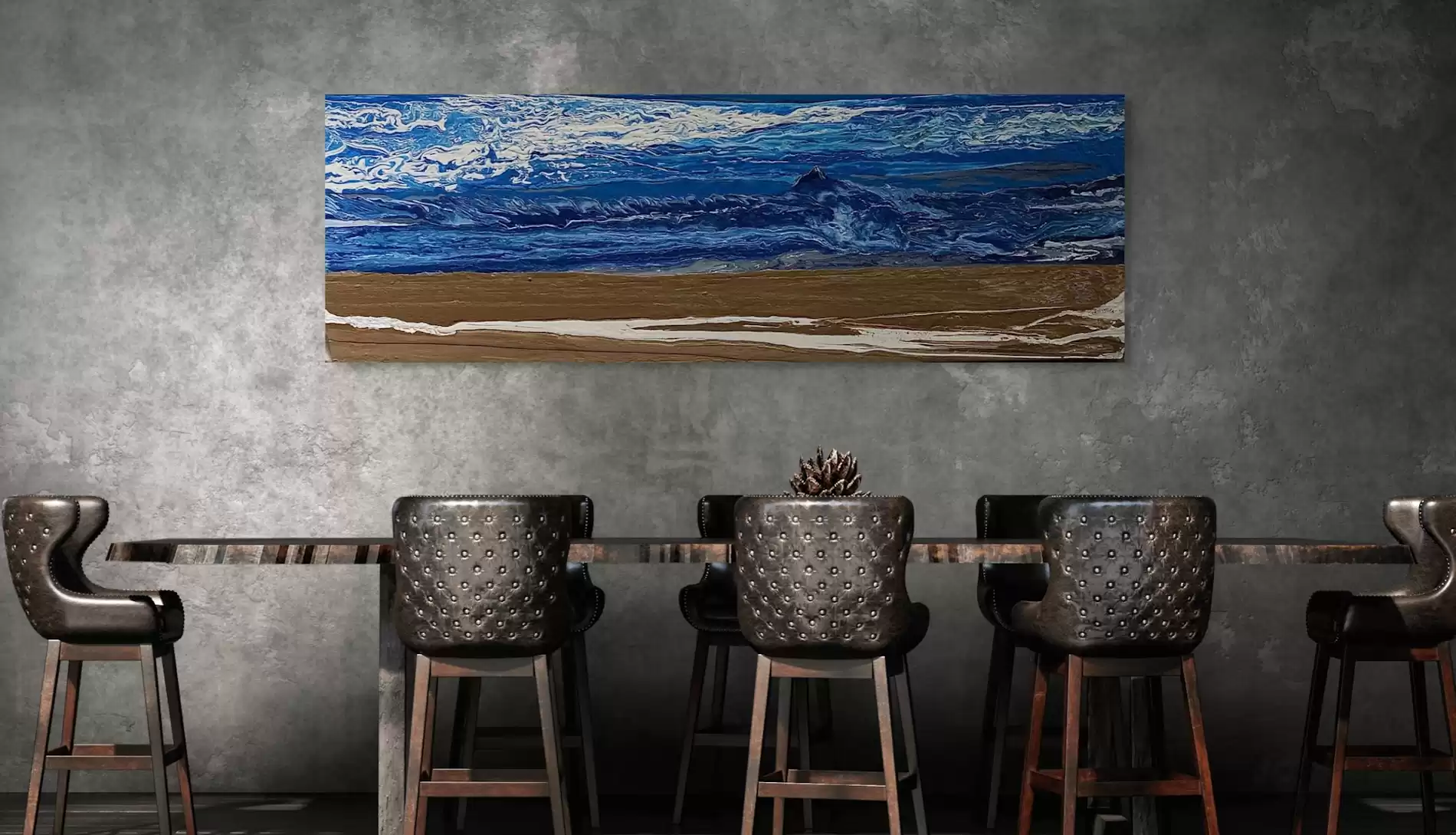
Step into any compelling interior—whether it’s a serene residence in Sonoma, a high-touch lobby in Manhattan, or a reimagined industrial loft—and chances are, you’ll find something quietly commanding your attention. Not a chandelier. Not a furniture piece. But something more instinctive – a large-scale, abstract work of art.
It doesn’t overwhelm. It settles.
Designers today are looking beyond symmetry and palette to something less tangible, but more enduring: emotional presence. And abstract art, particularly in bold, site-responsive formats, has emerged as one of the most powerful ways to achieve it.
The Shift from Decoration to Atmosphere
Interior designers have long known that art can tie a room together. But increasingly, they’re commissioning art not to complete a space—but to begin it
Rather than treating artwork as an afterthought, many designers are building around it—allowing a large-scale painting or photograph to define the rhythm, tone, and emotional resonance of a room.
It’s a subtle, but profound shift: from decoration to atmosphere.
“Abstract works create emotional weight,” says one designer behind a recent luxury residential project in Austin. “They don’t impose a narrative. They hold space for one.”
And in a time when interiors are expected to do more—calm, inspire, connect—abstract art has proven itself unusually adaptable.
The Case for Going Abstract
While representational art tells a story, abstract art leaves space for feeling. It speaks in a quieter, more intuitive language—one of texture, rhythm, and emotional openness. Rather than directing the viewer, it invites them in, shifting with the light, the space, and the energy of those who move through it.
This openness is exactly why designers and architects continue to return to abstraction. It creates a focal point without over-defining a space—drawing attention, inviting reflection, but never prescribing meaning. It grounds a room emotionally without tethering it to a specific theme.
Abstract work also aligns naturally with architectural intent. Its forms often echo structure—lines, mass, materiality—while softening or elevating the overall experience. It doesn’t compete with architecture; it converses with it.
And while trends come and go, abstract art endures. Its non-literal nature allows it to evolve with its surroundings, becoming part of the emotional architecture of a space—more companion than object.
In shared environments—hotels, wellness spaces, offices—it goes a step further. These works don’t just fill space; they give it feeling. They shape how people move, engage, and remember
In essence, abstract art offers what many interiors seek today: not just visual impact, but emotional depth. It becomes part of the experience—resonant, refined, and quietly alive.
That’s where the work of Peter Macon Meyer comes in.
Known for his emotionally intelligent, large-scale paintings and photographs, Peter’s work lives at the intersection of art and space. With a background in architecture and a process grounded in instinct, he creates abstract pieces that don’t merely complement a room—they complete it.
“I build emotions the way an architect builds space,” Peter says. “My work isn’t about decorating—it’s about grounding.”
Each commission begins with careful listening: to the space, its purpose, its materials, and the emotional tone it hopes to evoke. From this dialogue, Peter crafts original, hand-made works that shape how environments feel— adding presence, texture, and meaning to homes, hotels, offices, and beyond.
These are emotional structures—art that becomes part of the space’s memory and identity
The Takeaway
Abstract statement art isn’t a trend. It’s a response.
To the complexity of modern life.
To the layered needs of shared spaces designed to last
When chosen with care—or better, created in collaboration—abstract art becomes more than a piece on the wall. It becomes part of the architecture of feeling.
Explore Peter Macon Meyer’s portfolio of site-responsive works, or commission a piece tailored to your next residential, commercial, or hospitality project.